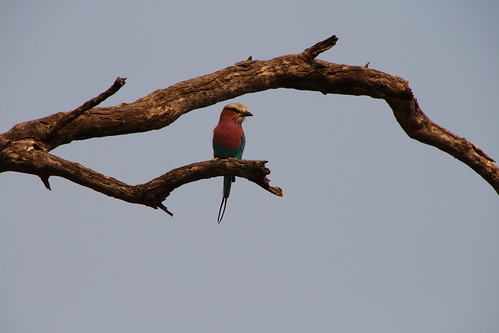
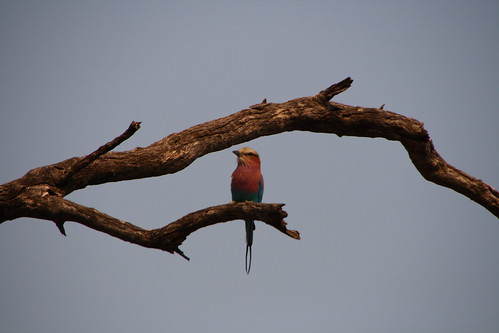
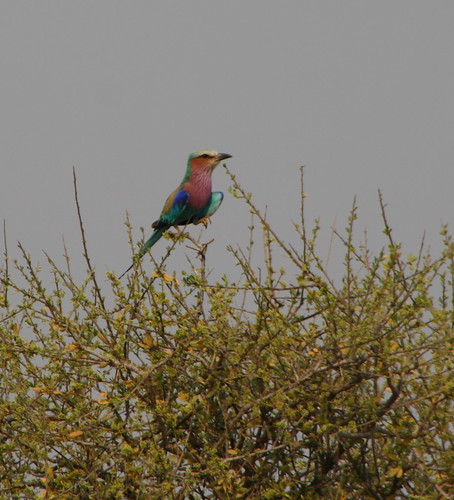
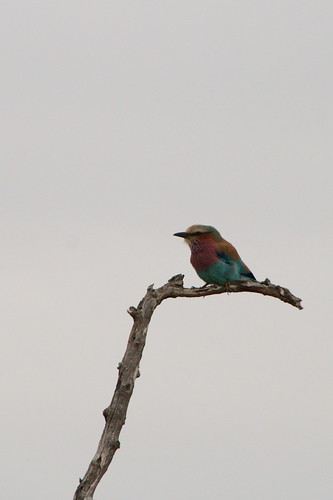
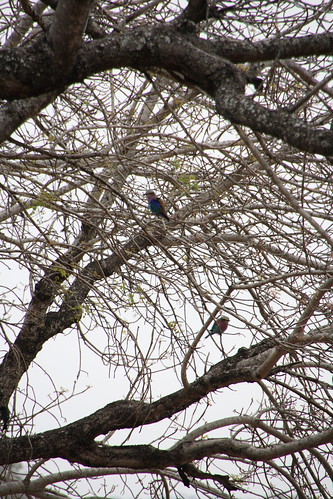
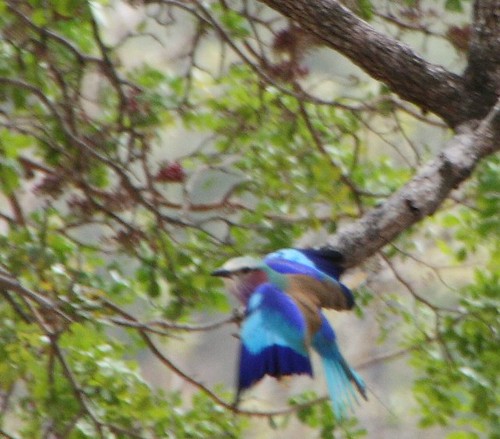
One of the prettiest birds we saw during our trip was the national bird of Botswana, the Lilac Breasted Roller. In fact, I could not stop taking pictures of it.
Mashatu:


Mala Mala:

This pair of Lilac Breasted Rollers was clearly nesting in this tree on the lawn at Mala Mala.

On our very last day, as we were waiting to leave for the airstrip, I managed to get a photo of one in flight.

Posted by Susan Getgood @
8:00 am |


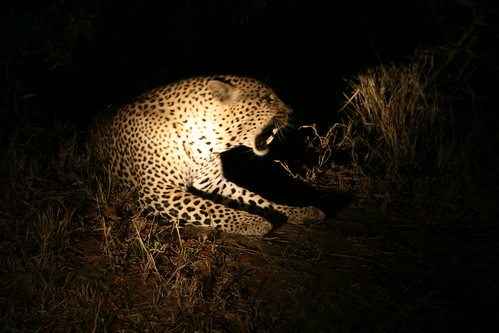
Leopard at Mala Mala
20-22 September 2009
My brother and mother have done a brilliant job delivering the blow-by-blow of the vacation over at Mashatu Tiger; here’s a link to Doug’s summary of our arrival at Mala Mala and here’s Mum’s rundown on our time there.
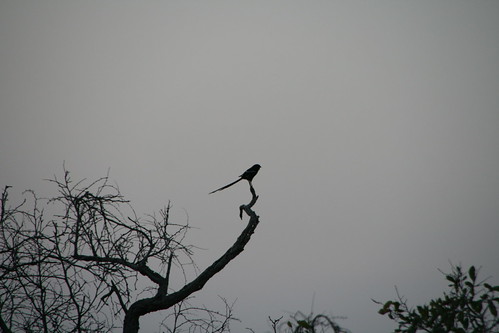
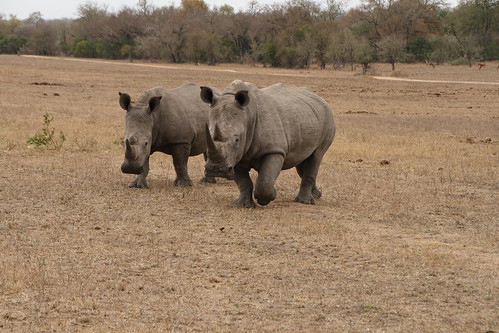
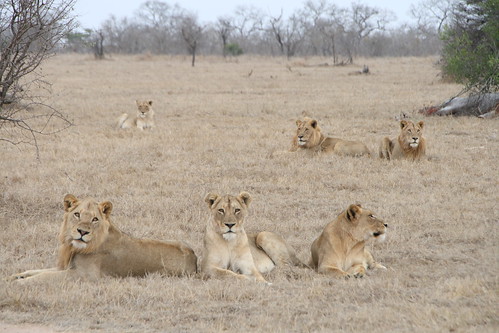
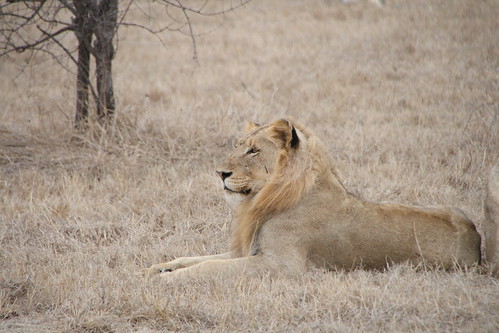
I’ll bottom line it for you. Mala Mala Main Camp is beautiful and very elegant. We saw some amazing animals, including the Secretary Bird and the Ground Hornbill. Lots of lions, leopards, elephant and giraffe. We had a tremendous sighting of two bull rhinos on the last morning. We saw a mother and baby hippo walking across the lawn around 11 pm from our room. Our ranger, Lucky, was phenomenal. He was even able to spot a chameleon in a tree at night.
For most of these photos, you’ll need to visit my brother’s photo gallery because I managed to delete a whole bunch of my pictures from Mala Mala when I got home (don’t ask, I am still pissed about it.)
Nevertheless, we preferred Mashatu. Why? Mala Mala is elegant and the hospitality is impeccable. It just didn’t feel as friendly and down to earth as Mashatu. In fairness, our experience of Mashatu may be a little colored by Mum’s friendship with Afke and deep knowledge of the native animals due to her time spent “at the Pond.” Likewise, our first night at Mala Mala was not the smoothest — starting with the long delay of the plane and ending with some confusion upon arrival, well detailed in my mom and brother’s posts linked above.
However, I’m a pretty objective person. Even after I eliminate all of that, if your budget is limited and you can only do one “luxury” game reserve, I would recommend Mashatu over Mala Mala. If you can visit both, by all means do. The landscapes are completely different, and there are animals in each place that you just won’t see in the other.
But if you have to choose, make it Mashatu.
That said, here are some of my favorite pictures from Mala Mala.


Photo Sets: September 20, 21, 22
Links:
Posted by Susan Getgood @
8:00 am |

We went to Africa because of Pete’s Pond.
A few years ago, my mom got involved in the online community for the National Geographic webcam at Pete’s Pond in Botswana.
Pete’s Pond is an artificial watering hole created to give the animals on the Mashatu Game Reserve an alternative water source to the nearby Limpopo River where they are easy targets for poachers. The webcam shares the activity at the Pond with viewers around the world.
Including my mom.
Last year, at about this time, my brother got the idea that we should take Mom to Africa. Amazingly, we made it happen.
The webcam is located in a hide, and runs 24×7. At night, it is on an automatic sweep, but during the day, there is a camera operator to find and follow whatever action is happening at the pond. In our western mentality, we think, how much could happen at a pond? Quite a lot actually. Especially in a semi-arid climate like Botswana where there isn’t much water most of the year. And, unlike the game drives, where the animals and birds are aware of the vehicle, at the Pond, they are mostly unaware (unless there are unexpected loud noises from the hide.)
When our plane from Mashatu to Mala Mala was delayed by four hours, we were privileged to spend the time at the hide. Afke, the volunteer who runs the webcam, had come to see us off, and when we had the long wait, she graciously invited us to wait at the Pond.
My full set of pictures is on Flickr, but here are some of my favorites.
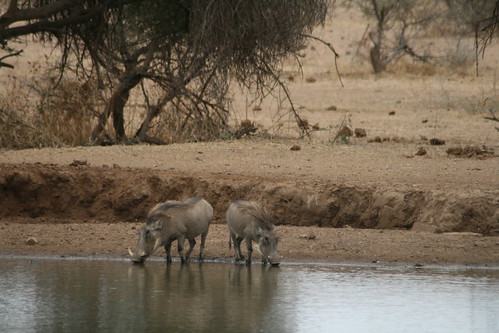
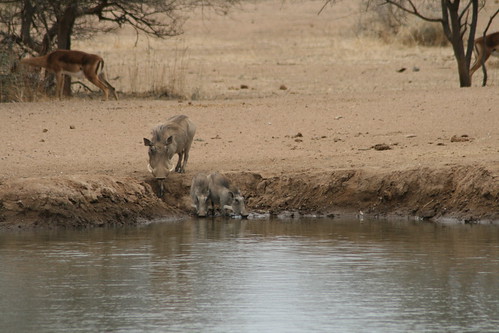
It’s hard to get good pictures of warthogs. They scamper off PDQ. I got my best shots of them from the hide.


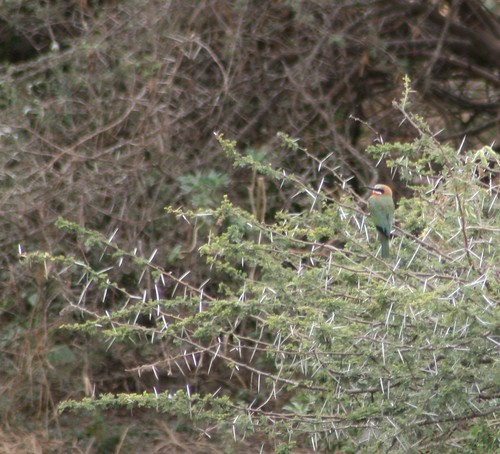
A Bee-eater

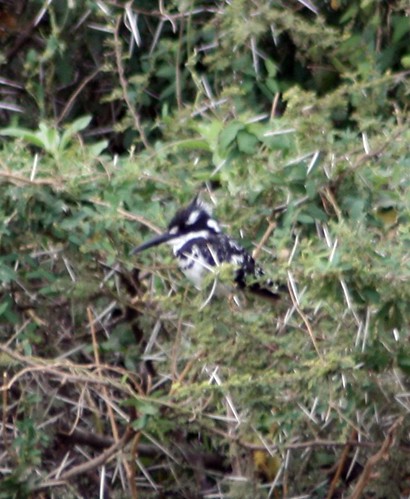
And a Pied Kingfisher

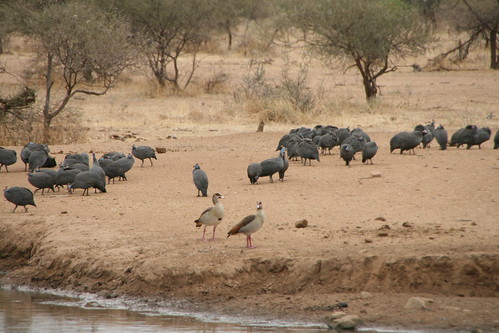
George & Gracie, the Egyptian Geese and GuineaFowl

Posted by Susan Getgood @
8:00 am |

Sunday September 20 2009


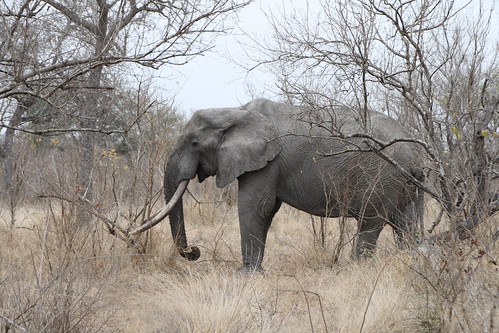
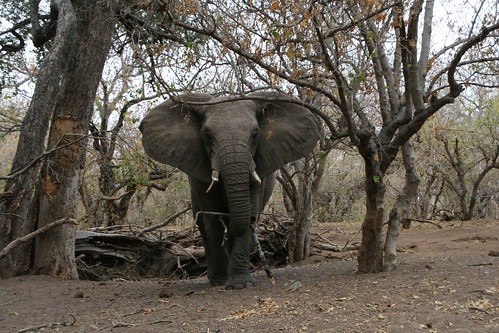
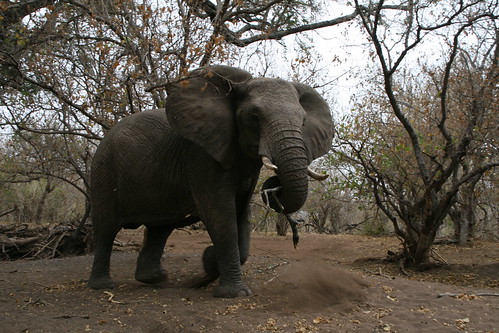
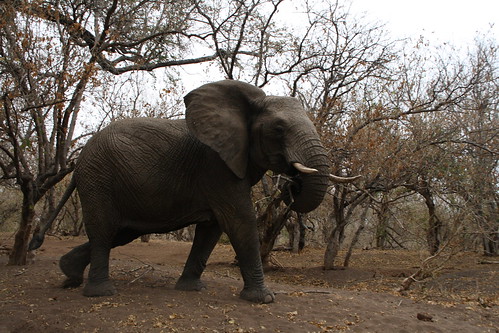
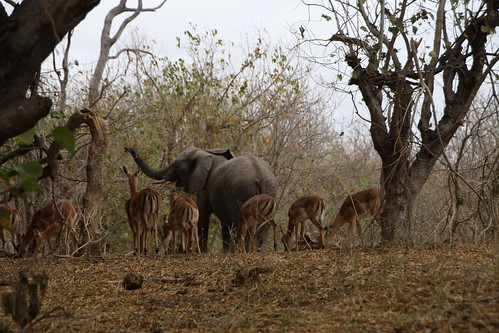
On our last drive at Mashatu, we got closer to an elephant than any of us ever thought we’d be… without zoo bars in between, that is. I knew we were pretty damn close when I heard Elvis mutter something like “that’s right mama, keep going…”
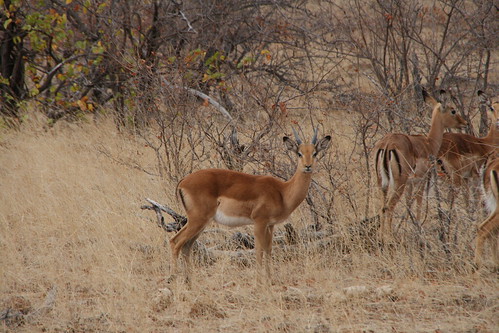
We also saw another leopard, ostrich and the ever-present impala. It was so interesting to see the different species interact, something we rarely see in zoos, even wonderful ones like San Diego’s Wild Animal Park.

More pictures from the morning drive.
All too soon it was time to make our way to the airport and say our good-byes. Afke, my mom’s friend who runs the camera at Pete’s Pond, came to see us off.

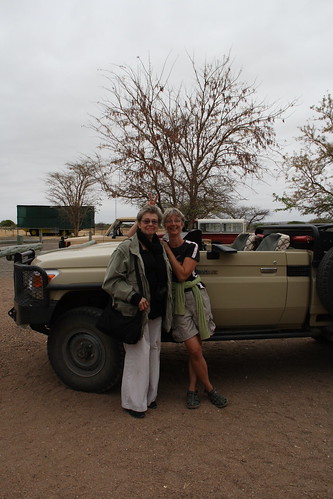
(Mum on the left, Afke on the right)
A mighty good thing that was, as our charter plane to Mala Mala in South Africa ended up being delayed by about four hours. Instead of hanging around the airfield or going back to Main Camp, Afke cheerily and without hesitation invited us to come to the Pond.
So all five us, Mum, Doug, me, and our now fast friends and traveling companions Michael and Gary made our way to Pete’s Pond for a completely different and quite unique wildlife viewing experience. One that you can share thanks to National Geographic’s 24-hour webcam.
More on Pete’s Pond in my next post.
Posted by Susan Getgood @
8:00 am |

Saturday, September 19 PM
Here are a few images from Mashatu Main Camp, including the resident bushbuck.
We had decided to do the Predator Drive instead of the regular game drive, so that afternoon we separated from our friends Michael and Gary, and our regular team of Elvis and Aaron, and went off with Andrei Snyman of Mashatu Research in search of one of the recently tagged leopards. The animal led us on a merry chase, but eventually Andrei was able to spot him and download some data from his collar.
We didn’t see nearly as many other animals on the Predator Drive as we had on previous drives, so if you are there for a short time I wouldn’t recommend it. However, we were at Mashatu for three days and had plenty of opportunity to see a variety of animals, so it was very interesting to see how the research process works.
If you would like to know more about the predator research at Mashatu, check out tulipredatorproject.ning.com

Andrei Snyman tracking a leopard

Impala
Posted by Susan Getgood @
9:49 pm |


Saturday September 19, 2009 AM
We never did find a tiger, but five cheetahs was a more than respectable substitute.
The bush is full of little stories, each playing out in a tableau that virtually ignores the presence of humans in four-wheel drive vehicles. On this morning, we watched hyena and cheetah in a dance probably as old as time.
First, we saw three cheetah brothers, largely ignoring the hyena nearby but responding to the distant drum of horses.


Then we saw a young male and his mother being tracked by a single hyena. Needless to say, the hyena didn’t press the issue.


Full set of photos from the day on Flickr.
Posted by Susan Getgood @
8:00 am |


Friday September 18 2009 Evening
We were very lucky to see the Wild Dogs of Mashatu. They had denned in Mashatu, but shortly before we arrived, the pack had gone south into South Africa.
In these photos, they are playing in the mostly dry stream bed of the Limpopo River.
It was particularly interesting for me as a breeder to observe the wild dogs. So much of their behavior is, not surprisingly, similar to the behavior of my dogs.
Other photos from the evening drive:

Warthog

Rock dassie

Quelea
Posted by Susan Getgood @
8:00 am |


Elvis
Mashatu would be a wondrous experience under any circumstances, but without a doubt, it is the people that make it so very, very special. While I am sure that all the rangers and trackers are excellent, because everything about Mashatu was, we considered ourselves very lucky to have Elvis as our ranger and Aaron, our tracker.
And not just because they knew their stuff, cold, which they did. Each drive exceeded the last, to the point where my brother joked to Elvis that he fully expected to see the (rarely seen) Honey Badger on the next drive.
It worked so well because not only did they get the jokes, they jumped right in themselves.
And there were more than a few jokes. Doug, Mum and I tend to “situational” humor, and so, it turned out, did our safari companions Michael and Gary. The jokes (mostly made by us at our own expense) flew pretty fast and furious.
I will never forget when we saw the aardwolf, Aaron commented that it was too bad there was a branch in front of its face, but if someone would hold the spotlight, he’d hop down and move it. Gary, bless his heart, immediately piped up that he would… then realized it was a joke and laughed as heartily (but quietly) as the rest of us.
Which brings me to the tigers.
There are no tigers in Africa. Except in zoos. But we figured that since Elvis and Aaron had exceeded expectations at every turn, they’d be able to do the impossible and find us one. I started it, after chatting with Mark Hardon on the Ivory Drive about tiger conservation efforts in South Africa, but it soon became a running joke. As we started each drive, we felt confident we’d finally spot the Tiger of Mashatu.
Next time, I guess…

Aaron
Posted by Susan Getgood @
8:00 am |

Friday September 18, 2009
The elephant research project at Mashatu is world-renowned, and the Ivory Drive gives Mashatu guests a flavor of their painstaking yet rewarding work. Jeanetta Selier, the principal researcher on the project, usually leads the Ivory Drive but unfortunately, she was away during our visit so we were accompanied by her associate Mark Hardon.
Mark did a noble job, even though the elephants weren’t “cooperating.” Our goal for the morning was to track an elephant named Agatha, but we just couldn’t find her.
Luckily, though, another large and well established herd was nearby, and the matriarch Hestelle let the herd come fairly close to us. Mum has an excellent description of the drive over on Mashatutiger.com, including a brief and amusing incident when a young elephant got so wrapped up in flirting with the impalas that he failed to notice that the herd had moved away. You’ve never seen an elephant move as fast (and as loudly) as that baby trying to get back to his momma.
Another highlight of the morning was a young leopard in a tree, who attracted the attention of some male baboon intent on protecting their territory from an interloper.
Some of my favorite shots from the morning.

Hestelle


More photos from the morning on Flickr.
Posted by Susan Getgood @
8:00 am |


Thursday September 17, 2009
Our day started very very early. We caught a 6:30 flight to Polokwane, South Africa and then transferred by road, about 2 hours, to the Botswana border. Mum’s friend Afke, who runs the webcam at Pete’s Pond, met us there. After clearing customs and immigration, we continued on to Mashatu Main Camp, now in the capable hands of Elvis and Aaron, the ranger and tracker who would be our hosts and guides for the next three days.
We arrived at Mashatu around noon. Our first game drive would start later that afternoon, but there was no shortage of interesting wildlife right around the camp, including this bushbuck, who seemed to be a permanent resident, and all sorts of birds and lizards.

photographed from our room

just outside our door
Around 3pm. we reconvened on the terrace for a light snack, and met the fellow guests who would be joining us on the game drives, Michael and Gary, Aussie expats living in Hong Kong. As Mum relates in her Mashatutiger.com post, we all hit it off tremendously, which really added to the experience for everyone.
Selected Photos from the Drive (Full photo set from the day)
Elvis and Aaron really set the bar high on our first drive. Everything was amazing, from the first impala to the setting sun. A real highlight, though, was the rare aardwolf.


Return to camp, dinner in the boma (highlight, the choral performance by the kitchen and wait staff) and then off to bed. One important note: your ranger accompanies you back to your cabin, and once “tucked in” for the night, you are requested to remain in your room. The information packet for guests clearly states:
Please do not leave the confines of your room after you have been walked back after dinner. The wall around the camp is not totally impermeable to some of the larger predators, which may enter once everybody has retired and all is quiet. There is a fog horn in your room which may be used during a night time emergency to summon the night watchman. Please be advised that an animal on your terrace, or roof, does not constitute an emergency. An animal inside your room does.
One of the things that sets Mashatu apart is its integration of active research programs into the tourism program on the Ivory and Predator Drives. The next morning, we were set to learn a bit more about the elephant research on the Ivory Drive.
Posted by Susan Getgood @
9:18 pm |